A B2B Sourcing Guide for Deep Drawn Food Containers and Tableware
How material choice affects food-contact safety, corrosion resistance, manufacturing quality, and long-term brand value.
Quick Answer for Sourcing Teams
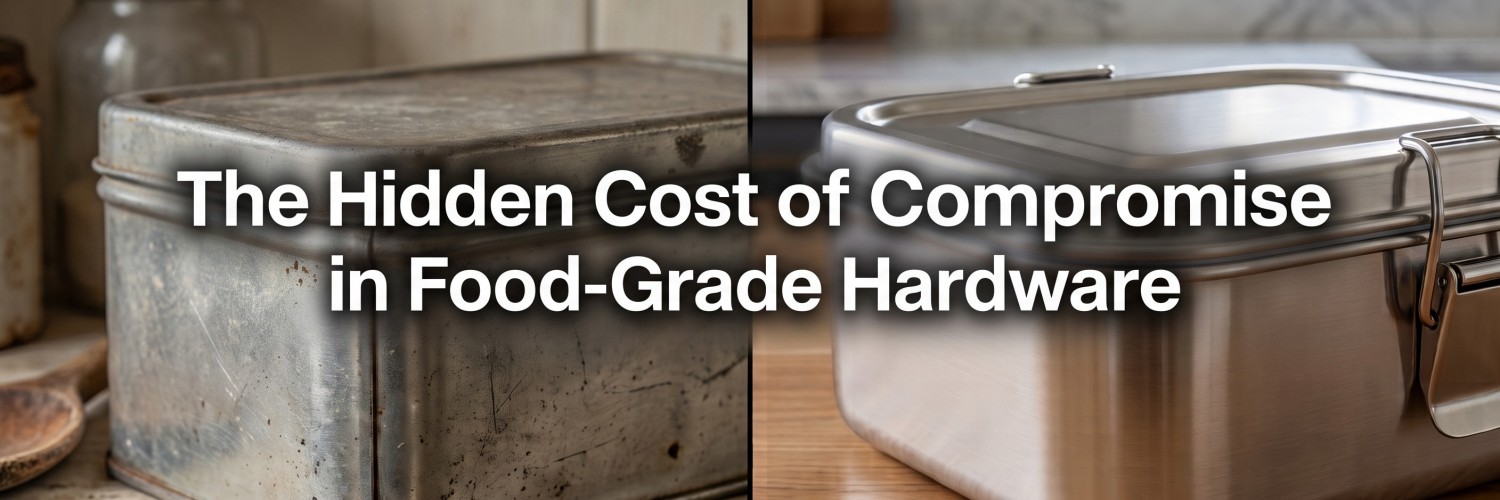
For premium food containers, lunch boxes, salad bowls, and tableware, 304 stainless steel is generally the stronger material choice when the product must withstand repeated cleaning, acidic foods, and long service life. Coated iron or carbon steel can reduce upfront material cost, but once the coating is scratched, chipped, or poorly maintained, the product may become more vulnerable to corrosion, taste transfer, and customer complaints.
For OEM and ODM buyers, the most important question is not only the material price per kilogram. The better question is whether the material supports stable forming, food-contact quality, repeatable finishing, lower return risk, and a premium user experience over time.
Why the Material Decision Matters
In kitchenware and dining product development, material selection influences almost every downstream decision: tooling design, forming limits, polishing quality, cleaning performance, compliance documentation, perceived value, and after-sales risk. This is especially true for deep drawn food containers, where the metal sheet is stretched into a seamless three-dimensional form.
Lower-cost iron-based materials may look attractive during early sourcing discussions, especially when they are coated, painted, or plated. However, food-contact products are exposed to moisture, salt, acidic sauces, citrus, vinegar-based dressings, dishwashing cycles, and daily mechanical abrasion. These conditions reveal the real difference between a temporary coating and a corrosion-resistant stainless-steel substrate.
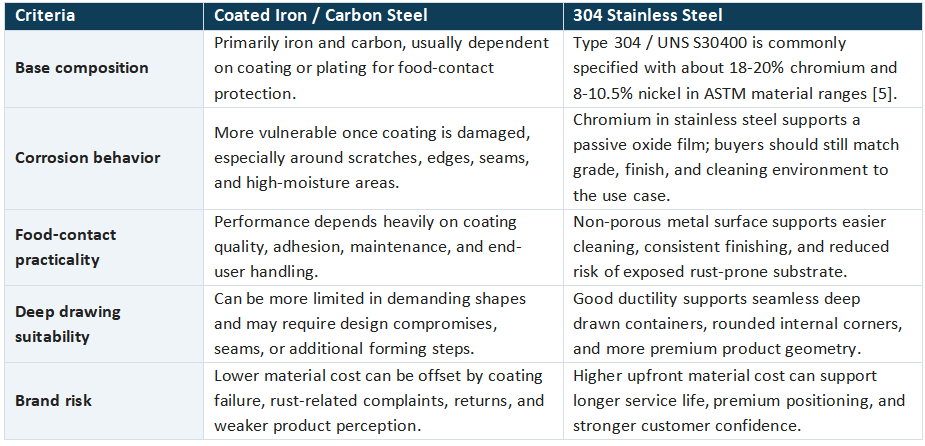
Material Comparison: Iron-Based Steel vs. 304 Stainless Steel
The Deep Drawing Advantage
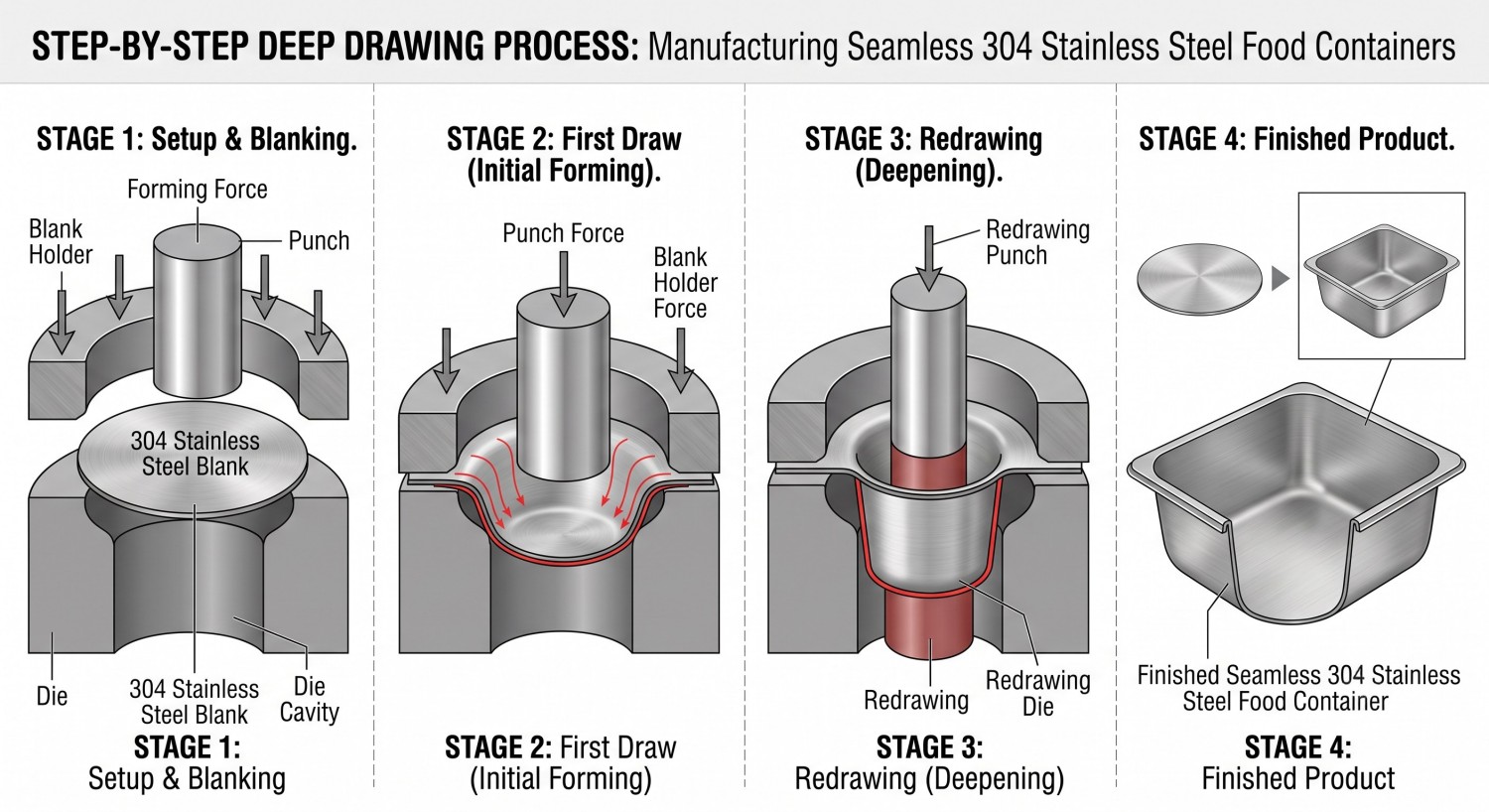
Deep drawing is a key manufacturing process for premium stainless steel homeware. Instead of assembling a container from multiple pieces, a flat stainless steel sheet is drawn into a bowl, box, cup, or tray shape through controlled forming. When executed well, the result is a smooth body with fewer weak points, cleaner internal geometry, and a more refined appearance. The regulatory logic is practical: food-contact seams should be smoothly bonded or maintained to reduce food-particle accumulation and the opportunity for microorganism growth [1].
Application Scenarios
1. Deep Drawn Lunch Boxes and Bento Containers
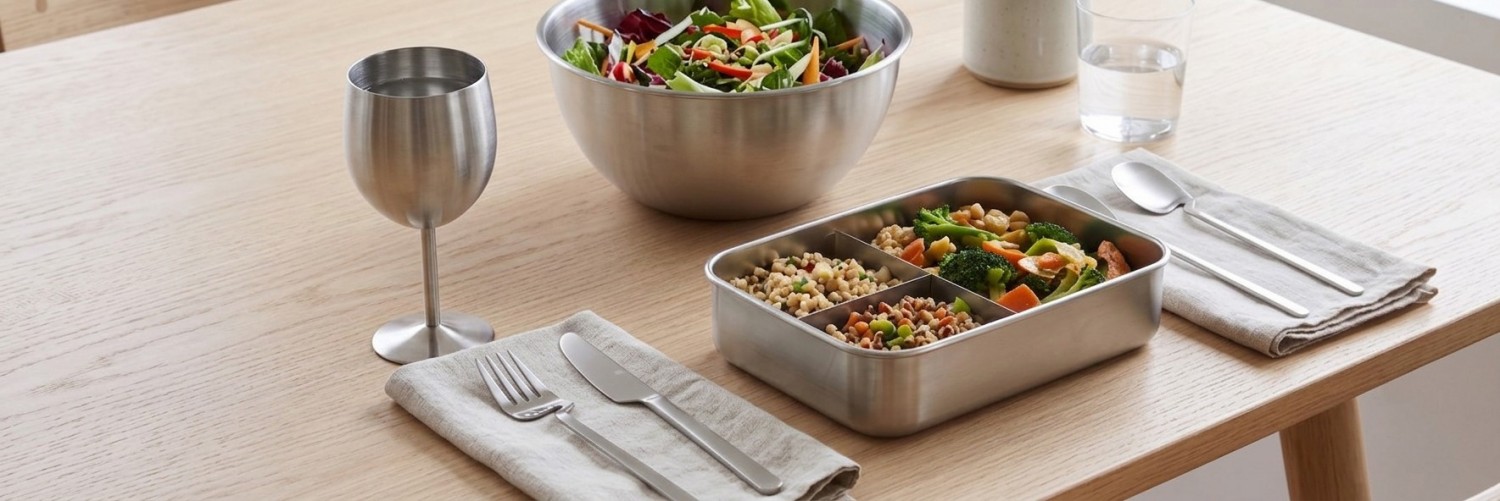
A premium lunch box should be easy to clean, comfortable to handle, and reliable in repeated use. A deep drawn 304 stainless steel body can reduce internal crevices and make rounded corners easier to polish and sanitize. For brands selling into retail, hospitality, corporate gifting, or outdoor lifestyle channels, this supports both hygiene perception and premium shelf appeal.
2. Stainless Steel Salad Bowls
Salad bowls are regularly exposed to acidic dressings, salt, moisture, and utensil contact. Coated iron products may perform acceptably at first, but scratches and chips can expose the underlying substrate. 304 stainless steel offers a more durable surface strategy for products expected to maintain appearance and function through frequent washing and daily use.
3. Premium Cups and Tableware
For premium drinking cups and tableware, 304 stainless-steel evaluate much more than basic corrosion resistance coating. They judge edge quality, thermal stability, weight balance, and the absolute absence of metallic aftertaste. Seamless, perfectly hygienic cups that are incredibly easy to sanitize and withstand daily rigorous use.
Total Cost of Ownership: The Buyer’s Perspective
Iron-based materials can reduce the initial bill of materials, but sourcing decisions should include quality risk, inspection burden, product returns, negative reviews, and brand reputation. In food-contact categories, even a small number of corrosion or coating-failure complaints can create outsized damage to customer trust. The global context is substantial: WHO estimated that unsafe food caused 866 million illnesses and US$310 billion in productivity and medical-expense losses worldwide in 2021 [3].
For brands that compete on durability, clean design, sustainability, and premium user experience, 304 stainless steel often provides stronger long-term value. It gives product teams a more robust foundation for consistent finishing, repeatable forming, and a clearer quality story.
What to Confirm Before Placing an OEM/ODM Order
· Material grade and traceability: confirm the stainless steel grade, supplier documentation, and batch control.
· Food-contact testing: request applicable test reports or declarations for the target market and product use case.
· Standard alignment: for commercial food-service programs, check whether NSF/ANSI 51 food equipment materials or NSF/ANSI 36 dinnerware expectations are relevant to the buyer’s channel [2].
· Tooling capability: review whether the factory can deep draw the required shape without thinning, cracking, or visible forming defects.
· Surface finish standards: define polishing, brushing direction, edge smoothness, and acceptable cosmetic tolerances.
· Packaging and logistics: protect polished surfaces from abrasion during shipping and retail handling.
Partner with Sunstar for Deep Drawn Stainless-Steel Homeware
Sunstar is an OEM/ODM manufacturer focused on stainless steel household products, including deep drawn lunch boxes, food containers, salad bowls, and tableware. We support product development from concept and tooling through sampling, quality control, packaging, and mass production.
For buyers targeting the US and global markets, Sunstar helps translate product ideas into manufacturable stainless steel designs with practical material selection, stable production processes, and export-ready execution.
Call to action Planning a custom 304 stainless steel lunch box, salad bowl, or tableware project? Contact Sunstar to discuss your specifications, target market, and production timeline. |
FAQ
Is 304 stainless steel better than iron for food containers?
For premium reusable food containers, 304 stainless steel is usually preferred because it resists corrosion, cleans easily, and does not rely on a separate coating to protect the base metal.
Why is deep drawing important for stainless steel lunch boxes?
Deep drawing can create a seamless container body with smooth rounded corners, reducing weak points and improving cleanability.
Can coated iron be used for tableware?
Coated iron can be used in some products, but performance depends on coating quality and careful use. Once the coating is damaged, corrosion risk increases.
What should buyers ask a stainless steel OEM/ODM supplier?
Buyers should ask about material grade, traceability, food-contact testing, recognized standard alignment, tooling capability, surface finish standards, packaging protection, and production lead time.
Sources
[1] eCFR, 21 CFR 117.40 Equipment and utensils: https://www.ecfr.gov/current/title-21/chapter-I/subchapter-B/part-117/subpart-B/section-117.40
[2] FDA, List of American National Standards for Food Equipment - Fact Sheet: https://www.fda.gov/media/133482/download?attachment=
[3] WHO, Food safety fact sheet, 4 June 2026: https://www.who.int/news-room/fact-sheets/detail/food-safety
[4] FDA, Food Code 2022: https://www.fda.gov/food/fda-food-code/food-code-2022
[5] ASTM material-grade reference for Type 304 / UNS S30400: ASTM A240/A240M covers chromium and chromium-nickel stainless steel plate, sheet, and strip and requires conformance to specified chemical composition and mechanical properties. Verify exact chemistry through mill test certificates for each production batch: https://store.astm.org/a0240_a0240m-24.html